Teams often use demo, prototype, and MVP as if they mean the same thing. They do not. Confusing them leads to the wrong scope, wrong budget, and wrong expectations.
An AI demo can be persuasive, a prototype can be technically useful, and an MVP can create product evidence. The question is which kind of evidence you need next.
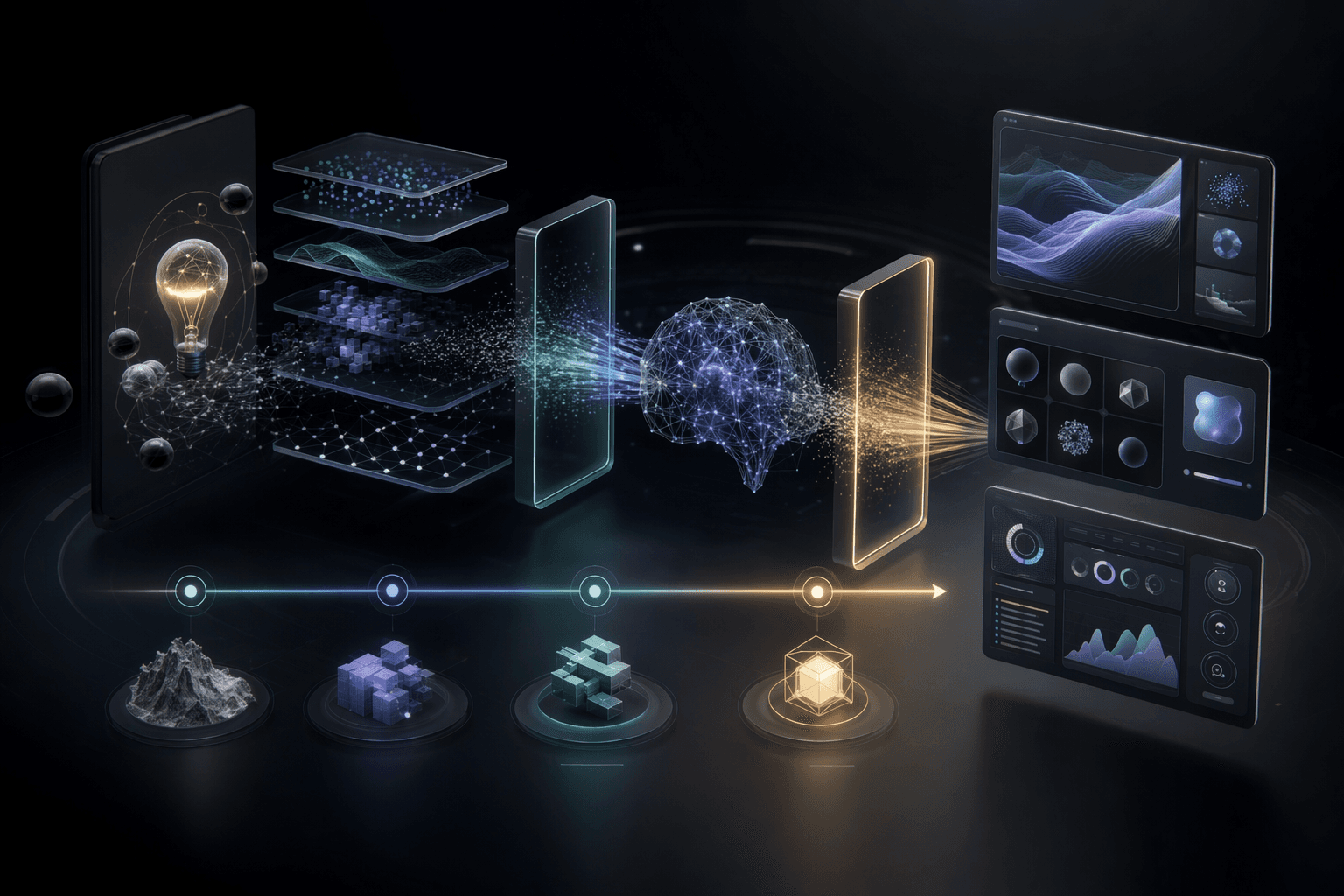
Demo
attention
Useful for storytelling, sales exploration, or internal buy-in before technical risk is the main question.
Prototype
feasibility
Useful when the team needs to test whether the AI behavior or integration path can work.
MVP
workflow evidence
Useful when users need to complete a real job and the team needs feedback from usage.
Core idea
Do not buy an MVP when you only need a demo, and do not call a demo an MVP when users need to test a real workflow.
Service
AI MVP Development
Fixed-scope AI MVP delivery for founders and product teams validating a concrete product path.
OpenProof
Production Work
Review the project library behind MythyaVerse AI, XR, automation, RAG, and product delivery.
OpenService index
MythyaVerse Services
Browse the focused service pages for RAG, AI agents, automation, support bots, XR, metaverse, and recruiting.
OpenDecision Type
Each build stage answers a different business or technical question.
3 validation modes
Engineering Depth
The more real the workflow, the more you need logs, data handling, and handoff paths.
4 engineering layers
User Risk
MVPs carry more responsibility because real users can misunderstand or act on outputs.
3 risk checks
Planning Decisions
Choose the Build Stage by the Question You Need Answered
The stage is not a status symbol. It is a tool for reducing uncertainty.
Use a demo for narrative proof
Decision
A demo is best when the audience needs to understand the idea quickly and the product does not need to survive unscripted usage yet.
Why it matters
Demos are cheaper and faster because they can control data, paths, and failure cases.
Practical move
Keep the demo honest by labeling assumptions and avoiding claims that it is production-ready.
Use a prototype for technical proof
Decision
A prototype is useful when the key risk is retrieval quality, model output structure, data access, or integration feasibility.
Why it matters
It lets the team test the hardest technical assumption before investing in the full product surface.
Practical move
Prototype the riskiest component with real examples and a clear pass-fail threshold.
Use an MVP for workflow proof
Decision
An MVP should let a real user complete the core job with enough product context to give meaningful feedback.
Why it matters
User evidence only appears when the workflow is real enough for behavior, friction, and trust issues to surface.
Practical move
Build the smallest deployable workflow with onboarding, output review, logs, and next-step capture.
Operating Model
What Each Stage Should Include
The difference between stages is not only polish. It is how much uncertainty the system is allowed to hide.
Demo
A scripted or lightly interactive experience that communicates the concept and desired outcome.
Where it helps
Useful for investor conversations, early sales exploration, and internal alignment.
Prototype
A focused technical build that exercises one risky component with realistic inputs.
Where it helps
Useful when feasibility is uncertain and the team needs evidence before productizing.
MVP
A deployable first version of the workflow with enough UX, data handling, and logging for user feedback.
Where it helps
Useful when the next decision depends on usage, retention, willingness to pay, or operational fit.
Production product
A hardened system with security, scale, observability, support, and governance requirements.
Where it helps
Useful once the workflow has enough evidence to justify broader rollout.
Practical Checklist
Stage Selection Checklist
Use these questions to decide what to build next.
Keep this in mind
Most teams waste money by building the wrong stage with the wrong expectations.
Clarity about the evidence you need makes the product plan more honest and easier to execute.
Work With MythyaVerse
Scoping an AI MVP that needs to become real software?
MythyaVerse helps founders and product teams turn a focused AI use case into a deployed MVP with clear scope, ownership, and production-minded engineering.
Continue Reading
Related articles

Best AI MVP Development Companies for Startups
The best AI MVP development company depends on founder stage, data readiness, workflow risk, and whether the MVP must become production software.
AI SaaS MVP: From Prototype to Production
An AI SaaS MVP becomes production-ready when the real workflow, data boundaries, model controls, fallback paths, logs, deployment, and learning loop are designed together.

AI MVP Readiness Checklist for Founders
Founders are ready to build an AI MVP when one painful workflow, target user, success metric, approved data, review owner, launch boundary, risk controls, and learning plan are clear.