Quick answer: founders are ready to build an AI MVP when they can name one painful workflow, target user, success metric, approved data source, review owner, launch boundary, risk controls, and post-launch learning plan.
Readiness does not mean every final-product feature is defined. It means the first build has enough clarity to turn an AI idea into a narrow, reviewable workflow that real users or stakeholders can test without the founder manually explaining every step.
Use this checklist before hiring an AI MVP team, approving a build scope, or turning a prototype into a first release. The goal is to reduce avoidable ambiguity, not to make the first version bigger.
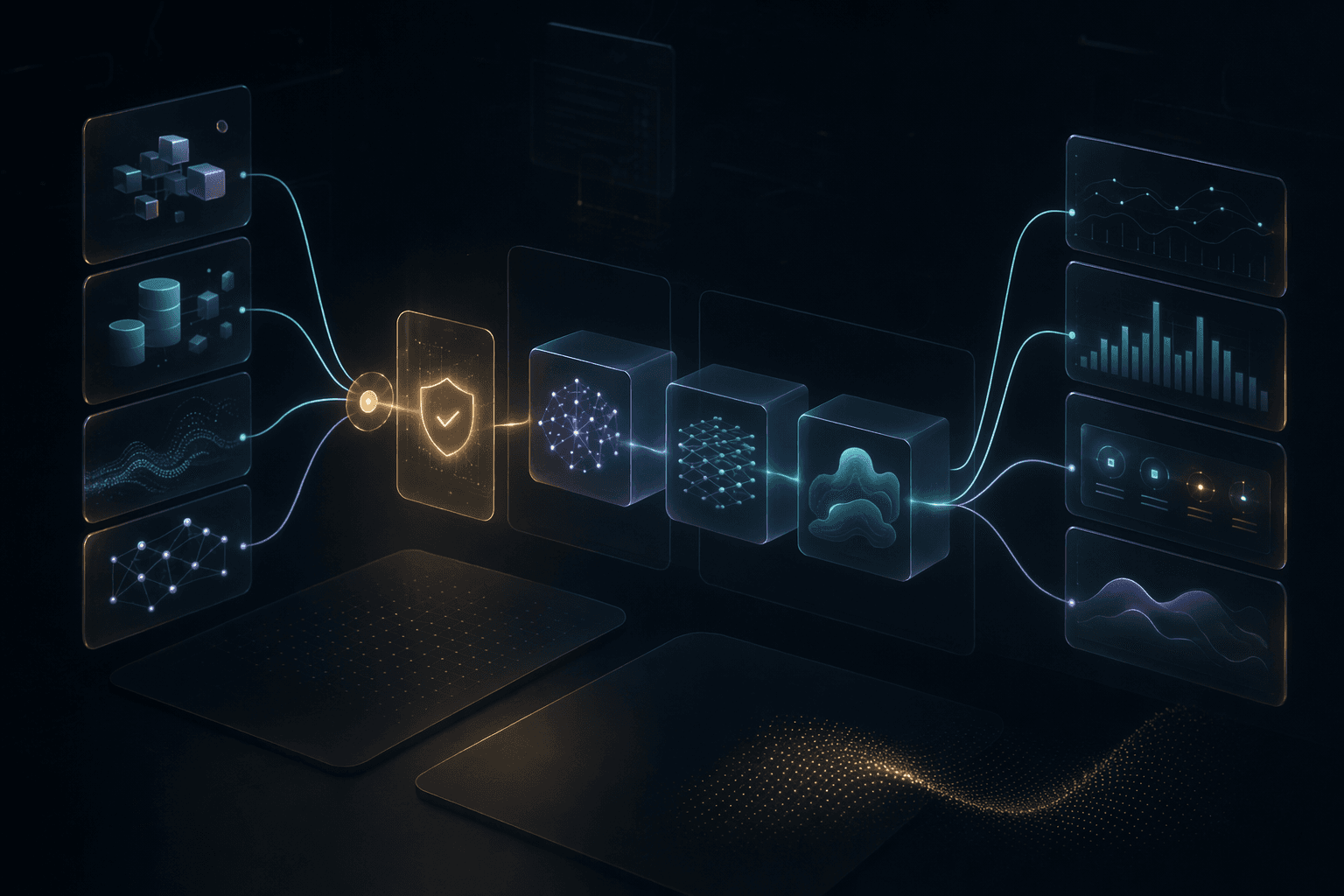
1
painful workflow
Readiness starts with one user job that is important enough to validate, not a broad assistant idea.
10
readiness checks
Problem, workflow, data, AI behavior, UX, integration, risk, deployment, budget discipline, and learning should be explicit.
Named
review owner
Someone must own output review, exceptions, feedback, and the decision to keep improving the MVP after launch.
Core idea
An AI MVP is ready to build when the founder can define the workflow, data, AI behavior, review path, launch boundary, and learning loop before engineering starts.
Service
AI MVP Development
Fixed-scope AI MVP delivery for founders and product teams validating a concrete product path.
OpenProof
Production Work
Review the project library behind MythyaVerse AI, XR, automation, RAG, and product delivery.
OpenService
RAG Development Company
Enterprise retrieval, hybrid search, grounding, evaluation, observability, and secure deployment.
OpenService
AI Agents Development
Agentic workflow systems with tools, boundaries, review loops, and escalation paths.
OpenService
Enterprise AI Automation
Workflow automation for teams connecting AI decisions with operational systems and dashboards.
OpenService
AI Chatbot and Support Automation
Customer support automation with knowledge bases, guided workflows, routing, escalation, and analytics.
OpenBuild Readiness
The founder can describe user, workflow, data, success signal, and launch boundary.
5 inputs
AI Controls
The team knows where output needs grounding, review, refusal, fallback, or human approval.
5 controls
Learning Loop
The MVP has a plan for limited launch, feedback capture, issue review, and next-scope decisions.
4 loop parts
Planning Decisions
The AI MVP Readiness Checklist
A readiness checklist should be completed before the build starts. It is different from a feature checklist because it asks whether the founder has enough clarity to make the first release useful.
If several answers are still vague, discovery should come before a full MVP build. That is usually cheaper than discovering the missing assumptions after engineering has already started.
Problem and user readiness
Decision
The founder can name the target user, the painful workflow, the current workaround, and the reason this problem deserves an AI MVP instead of a manual process or simple software rule.
Why it matters
AI MVPs become unfocused when the team starts from a technology idea instead of a user job with visible pain.
Practical move
Write one sentence that names the user, the workflow, the current pain, and the outcome the MVP should improve.
Workflow readiness
Decision
The first release has a beginning, input, AI action, review step, output, next user action, and clear non-goals.
Why it matters
A model response is not enough. The product needs a workflow that users can complete and the team can evaluate.
Practical move
Map the workflow from trigger to result and remove adjacent flows that are not needed for the first validation decision.
Data readiness
Decision
The approved source data, examples, documents, tickets, transcripts, records, or test cases are available, usable, and owned by someone who can approve access.
Why it matters
Most AI MVP risk appears when real inputs are messy, sensitive, incomplete, stale, or different from demo examples.
Practical move
Prepare a small approved sample that includes normal, messy, sensitive, missing, and out-of-scope examples.
AI behavior readiness
Decision
The team can describe what the AI should produce, what it should refuse, when it should ask for help, and how weak or uncertain outputs should appear.
Why it matters
Unbounded AI behavior makes user trust, review, support, and debugging harder after launch.
Practical move
Define expected output formats, refusal behavior, fallback states, review requirements, and acceptance examples before polishing the interface.
UX and product readiness
Decision
Users can understand what to enter, what the AI is doing, how to review the output, and what action to take next.
Why it matters
A good answer can still fail as a product if the user cannot correct, save, export, approve, retry, or act on it.
Practical move
Design the first user path around input, processing state, output review, correction, next action, and feedback capture.
Integration readiness
Decision
Required systems, APIs, files, authentication, permissions, and manual substitutes are known before the build is scoped.
Why it matters
Integrations often change the MVP from a contained product slice into operational software with error handling, permissions, and support needs.
Practical move
Separate integrations into required now, mocked for launch, manual for launch, and postponed until evidence supports the next build.
Risk and review readiness
Decision
The founder can name who reviews AI output, which actions require approval, what must be logged, and what should happen when the system is wrong.
Why it matters
Review ownership protects users and gives the team useful evidence when AI behavior misses the mark.
Practical move
Assign a review owner and define approval, rejection, correction, escalation, and incident review paths before launch.
Deployment and support readiness
Decision
The MVP has a planned deployment path, environment ownership, secrets handling, monitoring expectation, handoff notes, and support owner.
Why it matters
A local demo cannot teach the founder much about real usage, support friction, or operational reliability.
Practical move
Treat deployment, logs, known limitations, setup notes, and support ownership as part of the MVP scope.
Budget and timeline readiness
Decision
The founder can approve a release boundary, decision cadence, dependency list, and tradeoff process before asking for a committed build plan.
Why it matters
Budget and timeline discussions stay vague when scope, data, integrations, review, and handoff responsibilities are undefined.
Practical move
Discuss budget and timeline only after the team agrees what version one must prove, what it will exclude, and who can make scope decisions.
Learning and iteration readiness
Decision
The founder knows what evidence will be reviewed after launch and what would justify continuing, narrowing, pivoting, or stopping.
Why it matters
An AI MVP should create a decision, not only a deliverable. Without a learning plan, feedback becomes scattered opinion.
Practical move
Define the post-launch review cadence, feedback sources, failure examples to inspect, and next-scope decision before users are invited.
Operating Model
A Staged Path From Discovery to Learning
When readiness is incomplete, the answer is not to force the build. A staged path lets the team reduce uncertainty before committing to the MVP scope.
The path below keeps the work practical: discovery, scoped prototype, MVP build, limited launch, and learning loop. Each stage should end with a clearer decision than the previous one.
Discovery
Clarify the user, painful workflow, decision the MVP must support, data sources, risk areas, and first release boundary.
Where it helps
Prevents the team from building against a vague AI idea or a feature list that has not been connected to a user job.
Scoped prototype
Test the riskiest AI behavior, data sample, retrieval path, tool action, or workflow assumption before productizing the full slice.
Where it helps
Shows whether the core AI behavior is feasible enough to justify an MVP build.
MVP build
Build the narrow product workflow with approved data, model behavior, review states, required integrations, logs, and deployment path.
Where it helps
Turns the validated slice into usable software rather than a scripted demo.
Limited launch
Release to a small approved audience, keep risky actions reviewed, monitor errors, collect examples, and keep the launch boundary intact.
Where it helps
Creates real usage evidence without pretending the MVP is a mature production platform.
Learning loop
Review logs, feedback, failures, support questions, and user behavior before choosing the next investment.
Where it helps
Connects the MVP to the founder's next product decision instead of leaving the team with a static build.
Practical Checklist
Founder Questions Before Hiring
Use these questions before hiring an AI MVP partner or approving a build proposal. Good answers should make the scope narrower, clearer, and easier to test.
Keep this in mind
A founder is ready to build an AI MVP when the first release can be scoped as a narrow learning system: one workflow, real data, controlled AI behavior, review ownership, deployment path, and post-launch evidence.
MythyaVerse fits when a founder or product team needs scoped AI MVP delivery with production-minded engineering, a deployment path, ownership, and post-launch learning. The fit is strongest when the MVP needs practical RAG, AI agents, automation, or support workflows because the user problem requires them, not because the stack sounds impressive.
Work With MythyaVerse
Scoping an AI MVP that needs to become real software?
MythyaVerse helps founders and product teams turn a focused AI use case into a deployed MVP with clear scope, ownership, and production-minded engineering.
Continue Reading
Related articles
AI SaaS MVP: From Prototype to Production
An AI SaaS MVP becomes production-ready when the real workflow, data boundaries, model controls, fallback paths, logs, deployment, and learning loop are designed together.

Best AI MVP Development Companies for Startups
The best AI MVP development company depends on founder stage, data readiness, workflow risk, and whether the MVP must become production software.
AI MVP vs AI Prototype vs AI Demo: What Are You Actually Building?
Demos prove attention, prototypes prove feasibility, and MVPs prove whether a real user workflow deserves more investment.