An enterprise AI agent is not just a chatbot with a tool button. It is a workflow participant that reads context, decides what to do next, calls systems, and knows when to ask for help.
That makes the design question operational: what is the agent allowed to read, what is it allowed to change, and how will people inspect its decisions?

4
agent boundaries
Read access, write access, decision authority, and escalation rules should be explicit.
3
tool classes
Knowledge tools, workflow tools, and communication tools need separate controls.
1
audit trail
Every meaningful action should be traceable to input, policy, tool call, and result.
Core idea
The safest enterprise agents are not fully autonomous. They are bounded workflow systems with tools, permissions, review, and auditability.
Service
AI Agents Development
Agentic workflow systems with tools, boundaries, review loops, and escalation paths.
OpenService
Enterprise AI Automation
Workflow automation for teams connecting AI decisions with operational systems and dashboards.
OpenCase study
ZebPay Support Bot
A fintech support bot with guided workflows, routing, escalation, and analytics.
OpenWorkflow Fit
Agents work best where the next step depends on context and repeatable rules.
3 fit checks
Tool Boundaries
Permissions and confirmations matter more than the number of integrations.
4 tool checks
Human Review
Sensitive or irreversible actions should keep a clear human-in-the-loop path.
3 review checks
Planning Decisions
Where Enterprise Agents Actually Help
The best first agent is usually not the broadest one. It is the one attached to a workflow where context gathering and routing consume repeated human effort.
Choose a workflow with repeatable judgment
Decision
Good candidates include support triage, internal knowledge requests, document review, candidate screening support, or operations routing.
Why it matters
Agents need enough structure to act reliably and enough variation to justify AI assistance.
Practical move
Map the decision tree and mark which branches can be automated, suggested, or escalated.
Separate suggestions from actions
Decision
An agent may draft a response, recommend a next step, create a ticket, or update a system, but each action has different risk.
Why it matters
Write actions create operational consequences and need stronger controls than read-only assistance.
Practical move
Start with read-only or suggestion mode, then add confirmed write actions after behavior is reviewed.
Design for traceability
Decision
Users and operators need to know why an agent recommended a step or executed an action.
Why it matters
Opaque automation is hard to trust and harder to debug.
Practical move
Log source context, policy checks, tool calls, outputs, confirmations, and escalations.
Operating Model
A Practical Enterprise Agent Stack
Agent architecture should make authority and state explicit. The model should not be the only source of control.
Intent and policy layer
Classify the request, user role, action type, and allowed automation path.
Where it helps
Prevents the agent from treating every request as equally safe to automate.
Knowledge and context layer
Retrieve documents, tickets, records, conversation history, and workflow state.
Where it helps
Gives the agent enough context to make a useful recommendation.
Tool execution layer
Call approved systems with scoped permissions, confirmations, retries, and result checks.
Where it helps
Turns agent recommendations into controlled workflow progress.
Review and audit layer
Capture human approvals, corrections, logs, and failure patterns.
Where it helps
Makes the agent operable by business teams after launch.
Practical Checklist
Enterprise Agent Readiness Checklist
Before building an agent, make these operational choices visible.
Keep this in mind
Enterprise agents are strongest when they respect the shape of the business process.
The goal is not autonomy for its own sake. The goal is faster, more reliable workflow progress with clear accountability.
Work With MythyaVerse
Turning a repetitive workflow into a governed AI agent?
MythyaVerse builds agents with tool boundaries, human review paths, logs, escalation, and production integration discipline.
Continue Reading
Related articles

Best AI Agent Development Companies for Enterprise Workflows
The best AI agent development partner depends on whether you need custom workflow engineering, an enterprise platform, no-code automation, or code-first tooling.
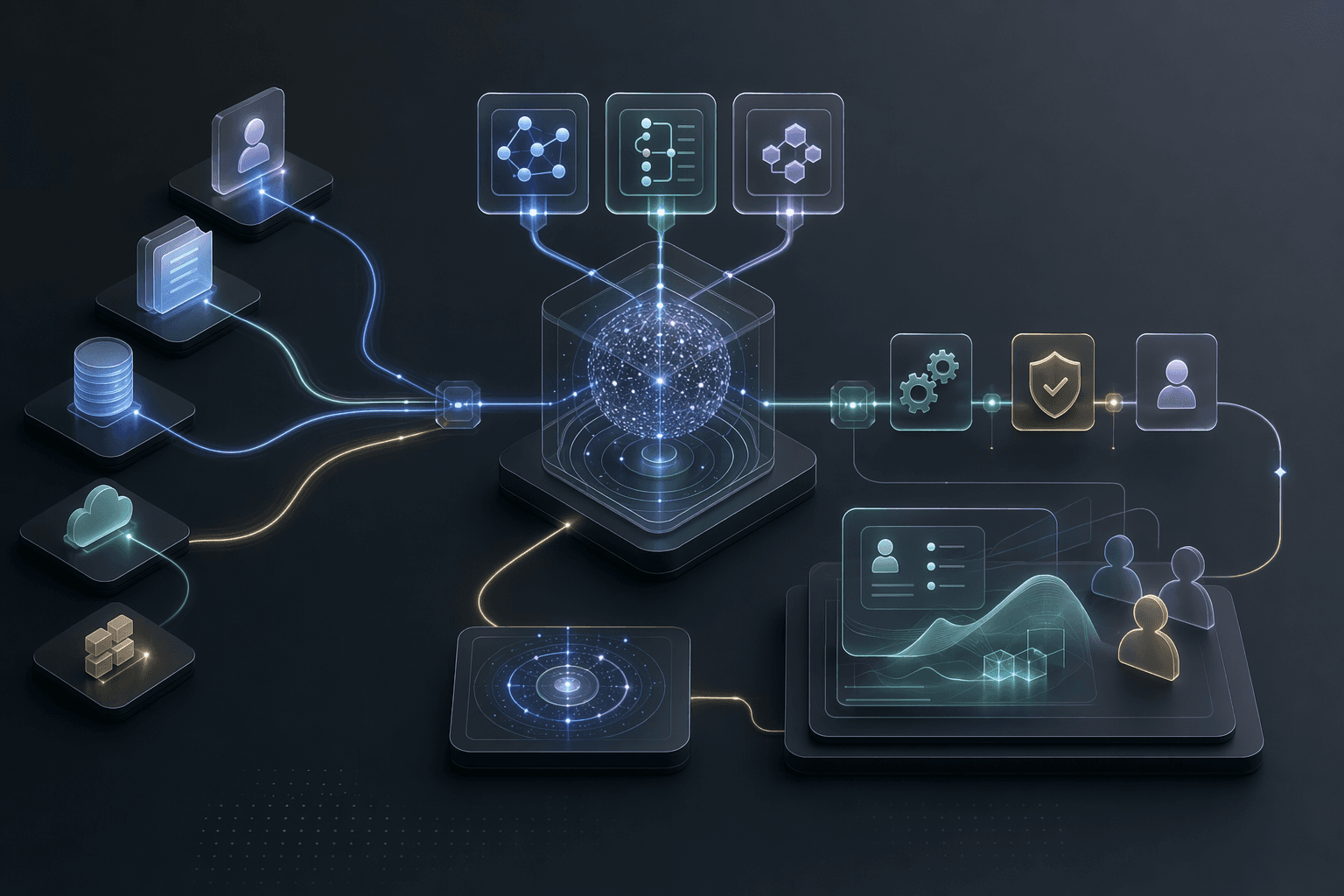
AI Agent Development Company: What to Look for Before Hiring One
Before hiring an AI agent development company, evaluate workflow discovery, data and tool mapping, permissions, approvals, logs, evaluations, deployment, and post-launch ownership.
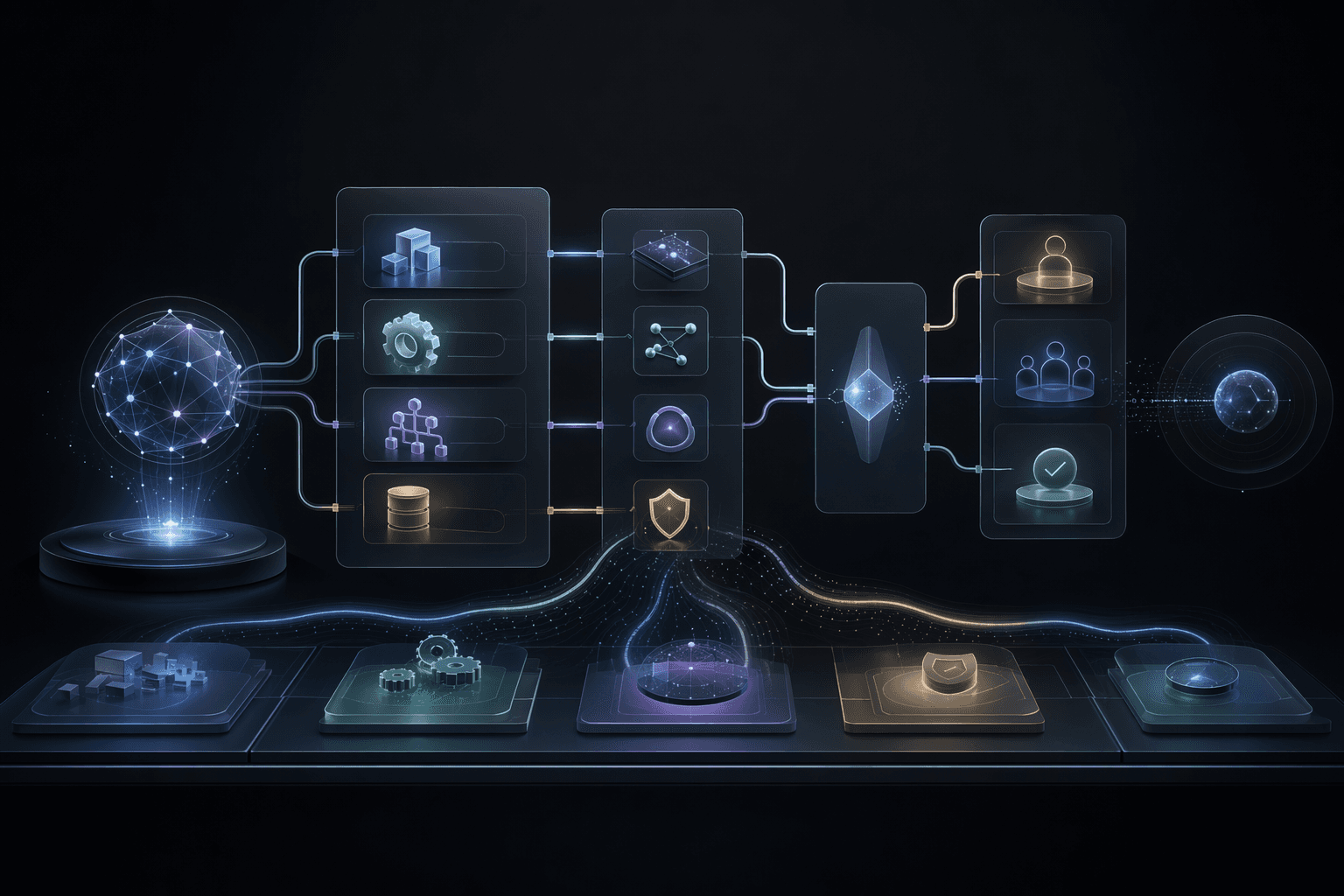
Enterprise AI Agent Readiness Checklist
An enterprise is ready for an AI agent when the workflow, data, tools, permissions, human review, evaluations, logs, monitoring, and launch owner are clear.