Engineering education often depends on equipment access, spatial reasoning, and repeated practice. Mixed reality can help when it makes invisible systems visible and lets learners manipulate concepts safely.
The key is not to replace labs. It is to extend practice where physical access, cost, safety, or repetition limits learning.
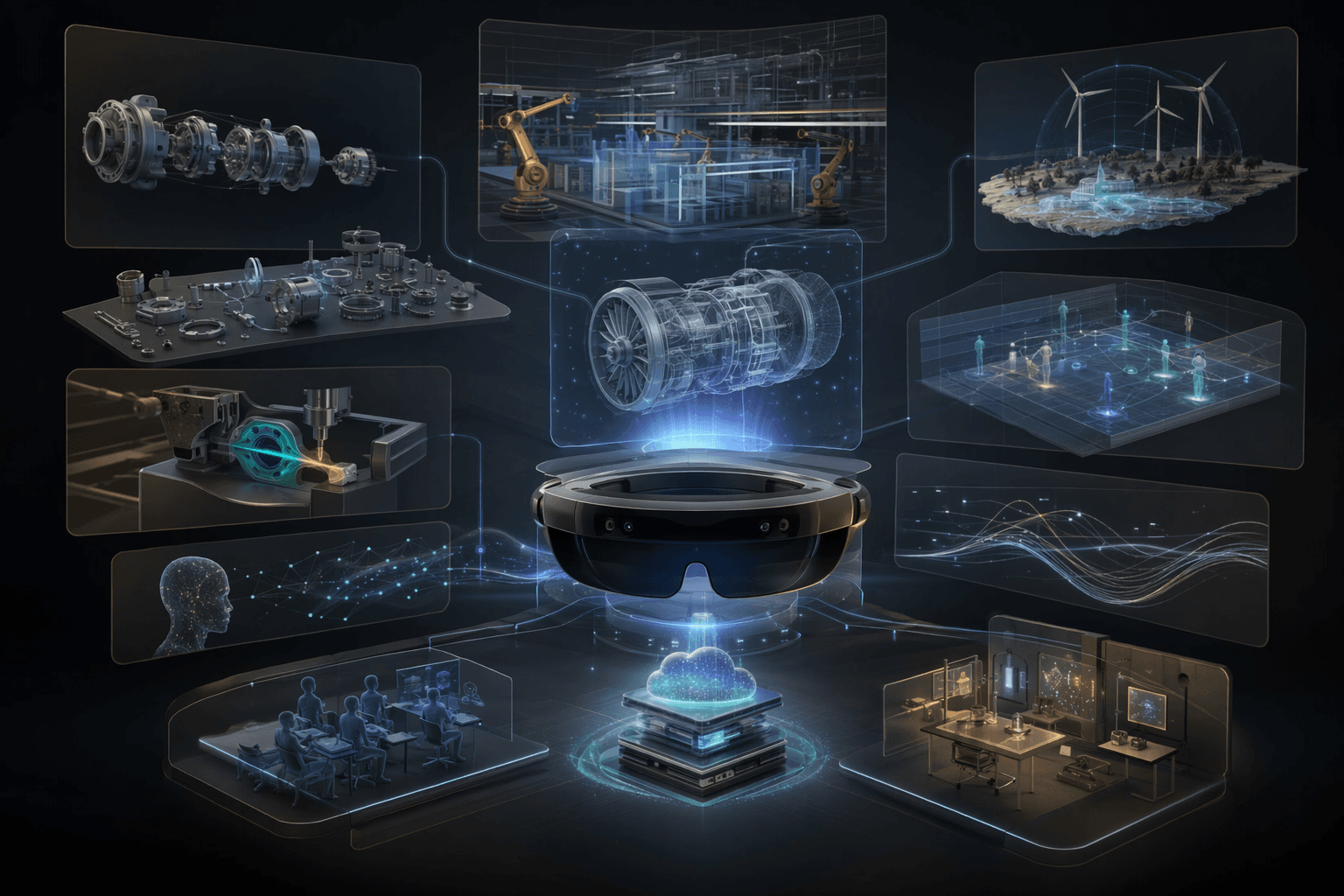
3D
spatial learning
MR can show relationships that are difficult to explain on flat slides.
Repeat
safe practice
Learners can revisit procedures or concepts without equipment bottlenecks.
Review
instructor insight
The system should help instructors see where learners struggle.
Core idea
Mixed reality labs should amplify instructor-led learning by making complex systems spatial, interactive, and reviewable.
Service
XR Training Simulations
VR, MR, and immersive training systems for education, employee engagement, and simulated practice.
OpenCase study
Mixed Reality Engineering Labs
An immersive engineering education case study focused on MR lab experiences.
OpenCase study
IIT Kanpur Virtual Microscopy Lab
A VR virtual lab example for practical education where access, practice, and repeatability matter.
OpenCurriculum Fit
MR should target topics where spatial understanding changes comprehension.
3 fit checks
Interaction Design
Objects, steps, labels, and feedback should support learning, not distract.
4 interaction checks
Instructor Role
Faculty need review data, facilitation guidance, and ways to connect MR to coursework.
3 teaching checks
Planning Decisions
Where Mixed Reality Adds Educational Value
MR is strongest when physical constraints limit practice or when spatial understanding is central to the topic.
Use MR for spatial complexity
Decision
Systems with layers, components, force paths, circuits, anatomy, machinery, or lab setups can benefit from spatial interaction.
Why it matters
MR should make something easier to understand, not simply make content look modern.
Practical move
Choose modules where 3D manipulation changes learner comprehension.
Keep instructors in the loop
Decision
The experience should support faculty, not become a disconnected standalone activity.
Why it matters
Educational value increases when instructors can brief, observe, debrief, and assess.
Practical move
Add instructor prompts, review screens, and alignment with existing lesson plans.
Plan safety and supervision
Decision
Physical movement, device hygiene, session length, and learner comfort matter in shared lab settings.
Why it matters
Operational details affect adoption in classrooms as much as technical quality.
Practical move
Define room setup, device management, facilitator roles, and fallback options.
Operating Model
Mixed Reality Lab Delivery Model
A good MR lab connects curriculum, interaction, device operations, and instructor review.
Curriculum mapping
Select concepts, outcomes, prerequisites, and assessment needs.
Where it helps
Keeps the experience tied to academic goals.
Spatial experience design
Design 3D objects, labels, guided steps, interactions, and feedback.
Where it helps
Makes the abstract concept visible and manipulable.
Device and classroom plan
Define hardware, space, session flow, supervision, and backup paths.
Where it helps
Reduces adoption friction during actual lab delivery.
Review and iteration
Collect learner feedback, instructor observations, and usage data.
Where it helps
Helps improve both content and facilitation over time.
Practical Checklist
Mixed Reality Lab Checklist
Use this before planning a new MR education module.
Keep this in mind
Mixed reality labs are strongest when they serve pedagogy first.
The technology should make difficult concepts more visible, more repeatable, and easier to discuss.
Work With MythyaVerse
Planning an immersive training system with real rollout constraints?
We help teams design VR, MR, and WebXR experiences around learning goals, hardware realities, repeatable practice, and measurable adoption.
Continue Reading
Related articles
How to Build a Virtual Lab for Education
A virtual lab should let students practice a concept or procedure that is hard to access, repeat, or visualize in ordinary classroom settings.
VR Training Simulation Development: A Practical Guide
A VR training simulation succeeds when the scenario, practice loop, device plan, and rollout model are designed around the learner's job.
XR for Employee Training and Engagement
XR employee programs work when they give teams a reason to practice, collaborate, or engage in ways ordinary screens cannot support well.